
If you are comparing cloudways premium vs standard, the short answer is this: Standard is usually the safer starting point for smaller WordPress sites, blogs, MVPs, and budget-conscious projects, while Premium is worth considering when your site has higher business value, heavier traffic, ecommerce revenue, or client-facing performance expectations.
The key is not to assume Premium is automatically the right choice. Cloudways is a managed cloud hosting platform, and the best tier depends on your workload, budget, cloud provider, support expectations, and growth plans. This guide breaks down the decision using verified Cloudways facts, practical buying logic, and no exaggerated benchmark claims.
Official website · Latest pricing & offers
Cloudways Premium vs Standard in 2026: quick verdict
The cloudways premium vs standard decision comes down to risk, workload, and budget. If your website is early-stage, mostly content-driven, or not yet generating meaningful revenue, Standard is often the more sensible first step. If your website supports ecommerce, client work, paid campaigns, or meaningful daily revenue, Premium may be easier to justify.
Here is the simple decision framework:
| Choose | Best fit | Main reason |
|---|---|---|
| Standard | Blogs, small business sites, new WordPress projects, MVPs | Lower-risk entry point and cost control |
| Premium | WooCommerce, agencies, high-traffic sites, growth-stage businesses | More suitable when performance headroom matters |
| Test first | Uncertain workloads | Cloudways plan choice should match real usage, not guesswork |
This article treats cloudways premium vs standard 2026 as a commercial decision, not a hype-driven speed contest. Official Cloudways pages confirm platform-level features and starting pricing, but they do not support every broad claim you may see in third-party comparisons.
Who should choose Standard
Choose Standard if you want managed cloud hosting for a site that is still growing, has moderate traffic, or needs predictable spending. The Cloudways Standard plan can make sense for bloggers, portfolio sites, local business websites, and development projects where cost control is important.
Standard is also a practical starting point if you are migrating from basic hosting and want to experience Cloudways’ managed environment before committing more budget. For many WordPress users, the best first move is to start lean, monitor actual site behavior, then upgrade only when the business case is clear.
Who should choose Premium
Choose Premium if your site has higher stakes. That could mean a WooCommerce store, a lead-generation site with paid traffic, a membership website, or agency-managed client sites where slowdowns create support issues or lost revenue.
The Cloudways Premium plan is best viewed as a performance-oriented option for users who value extra headroom. That does not mean every site will feel a dramatic difference, but it can be easier to justify when traffic, transactions, and user expectations are higher.
When the Cloudways Premium vs Standard upgrade is worth it
The cloudways premium vs standard upgrade is worth considering when the cost difference is smaller than the potential downside of underpowered hosting. For example, ecommerce checkout issues, slow campaign landing pages, and client complaints can cost more than the monthly hosting difference.
The upgrade is less compelling when your site is mostly static content, has low traffic, or is still validating an idea. In those cases, the smarter move may be to begin with Standard and revisit the choice after you understand real-world usage.
What Cloudways Premium and Standard actually are
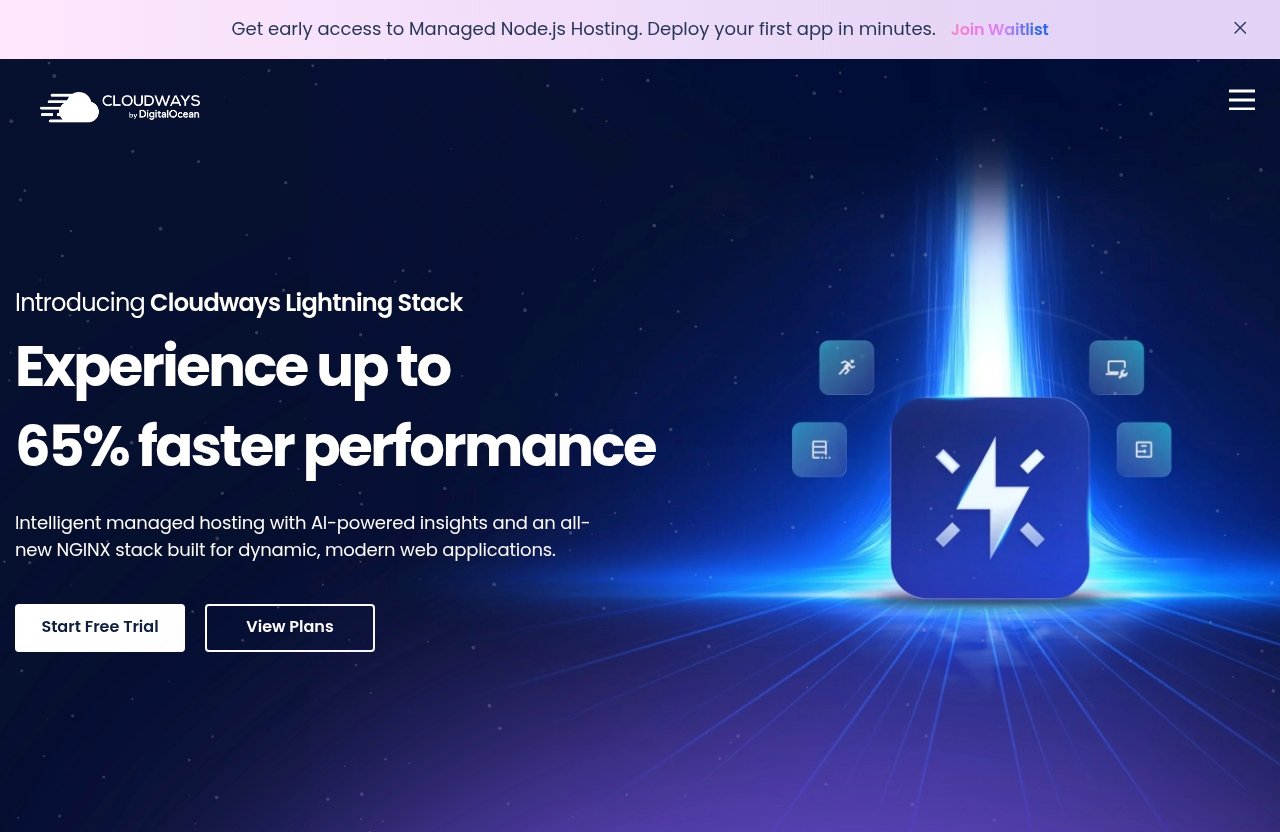
Cloudways is not traditional shared hosting. It is a managed cloud hosting platform that lets you run applications on infrastructure from cloud providers while Cloudways handles much of the hosting management layer.
That matters because the cloudways premium vs standard comparison is not just about a label. It is about choosing the right Cloudways plan type for the cloud provider, application, and resources your site needs.
Cloudways Flexible hosting overview
Cloudways’ official homepage describes Cloudways Flexible as “Customisable managed hosting for WordPress.” That positioning is important because many buyers are not looking for raw server administration. They want a managed platform for WordPress, WooCommerce, Laravel, Magento, PHP, or similar applications.
For WordPress users, the appeal is that Cloudways combines cloud infrastructure access with managed hosting features such as support, migration help, SSL, security, and performance-focused platform tools. The tier decision then becomes a matter of matching the hosting environment to your project’s demands.
Cloud providers available on Cloudways
Cloudways officially lists the following cloud providers on its homepage:
| Cloud provider | Listed by Cloudways |
|---|---|
| DigitalOcean | Yes |
| Vultr | Yes |
| Linode | Yes |
| AWS | Yes |
| GCE | Yes |
This is one reason cloudways standard vs premium comparisons can get confusing. Pricing and plan choices may depend on the underlying provider and selected resources. You should always verify the current plan details directly on the official Cloudways pricing page before making a final decision.
Why plan naming can be confusing
The terms Standard and Premium are often discussed as if they mean one universal difference across every context. In practice, buyers should be careful. Official Cloudways materials confirm the platform, cloud provider options, supported apps, and starting price, but they do not justify every simplified claim made in review articles.
That is why this guide avoids inventing server specs, storage types, or benchmark numbers. A trustworthy cloudways premium vs standard decision should be based on verified Cloudways pricing, official feature claims, and your own workload requirements.
Verified Cloudways pricing and feature facts
Before choosing a plan, it helps to separate official facts from assumptions. Cloudways hosting pricing can vary depending on provider and selected resources, so the most reliable source is always the current Cloudways pricing page.
For this article, the pricing and feature claims below are limited to verified official Cloudways information supplied for review.
Official plan price entry point
The official Cloudways pricing page says Cloudways pricing starts at $11/month. That is the verified entry point for Cloudways hosting pricing.
However, the final monthly cost depends on the cloud provider and resources you select. If you are comparing cloudways premium vs standard cost, do not rely on old screenshots, outdated reviews, or copied pricing tables. Check the live Cloudways pricing page before purchase.
What Cloudways officially includes
Cloudways’ official homepage lists these core features:
| Official Cloudways feature | What it means for buyers |
|---|---|
| Performance | Cloudways positions performance as a core platform benefit |
| Security | Security is part of the official platform messaging |
| 24×7 Expert Support | Help is available around the clock |
| Free Migration | Useful when moving from another host |
| Free SSL | Important for WordPress, WooCommerce, and business sites |
Cloudways also officially lists supported apps including WordPress, Laravel, Magento, WooCommerce, and PHP. That makes the platform relevant to bloggers, developers, agencies, ecommerce stores, and SMBs.
Advanced Support pricing note
Cloudways’ official homepage says Advanced Support has a current price of $100/mo and a new discounted price of $25/mo flat. This is separate from choosing Standard or Premium, but it matters if your business depends heavily on hands-on support.
If support expectations are part of your cloudways premium vs standard comparison, include Advanced Support in your overall budget review. A cheaper hosting tier plus upgraded support may be better for some teams than a higher tier with the wrong support assumptions.
Premium vs Standard: how to think about the difference
The most practical way to compare Premium and Standard is to ask what your site needs from hosting. Are you optimizing for the lowest reasonable cost, or are you buying margin for traffic spikes, ecommerce activity, client satisfaction, and future growth?
Because the supplied official sources do not confirm every technical difference people often mention online, this section uses cautious buying logic rather than unsupported technical claims.
Performance expectations
Cloudways performance matters most when users are waiting on your site to load, browse products, submit forms, or complete checkout. If your website earns revenue directly, the hosting decision becomes more than a monthly expense.
In the cloudways premium vs standard debate, Premium is commonly considered by users who prioritize performance headroom. Standard can still be appropriate when traffic is modest, the site is simple, and your budget matters more than maximum headroom.
Hardware and architecture considerations
Some comparisons discuss hardware or architecture differences between tiers. Be careful with those claims unless you verify them on the current Cloudways pricing page. Plan details can vary by provider, and this article does not assume unverified server specifications.
A better approach is to decide based on workload. If you run a simple brochure site, the Cloudways Standard plan may be enough. If you run a busier WooCommerce site, SaaS-style application, or agency portfolio of client sites, Premium may deserve a closer look.
Traffic and workload fit
Traffic alone is not the only factor. A content site with many cached blog posts may be easier to host than a smaller ecommerce site with dynamic carts, user sessions, and payment flows.
Think about workload complexity:
| Workload factor | Standard may fit | Premium may fit |
|---|---|---|
| Low to moderate traffic | Yes | Sometimes unnecessary |
| Heavy concurrent users | Maybe | More likely |
| WooCommerce checkout | Depends | Often worth considering |
| Client sites | Depends on SLA expectations | Often worth considering |
| Testing/MVP | Yes | Usually later |
| Revenue-critical site | Maybe | More likely |
This is where cloudways premium vs standard becomes a business decision. The more your site affects revenue or client trust, the easier it is to justify paying more for a plan that gives you more confidence.
Best use cases for Cloudways Standard
The Cloudways Standard plan is best for users who want the benefits of managed cloud hosting without immediately stepping into a higher-cost option. It gives you a practical way to use Cloudways while keeping the budget controlled.
Standard is not just for tiny projects. It can be a smart choice for serious websites that are early in their growth curve or do not yet need extra performance headroom.
Blogs and content sites
For blogs, editorial sites, personal brands, and small business content hubs, Standard is often the natural first choice. These sites usually care about reliability, SSL, migration, support, and WordPress usability, but may not need a more performance-oriented tier from day one.
If your blog is growing steadily, start by looking at traffic patterns, plugin load, and publishing frequency. The cloudways premium vs standard decision should happen after you understand whether your content site is actually stressing its current resources.
New projects and MVPs
New projects rarely need the most expensive reasonable option immediately. If you are launching an MVP, testing a product idea, or building a client demo, Standard can reduce risk while still giving you access to a managed cloud hosting platform.
Developers may also prefer Standard for staging, prototypes, and low-traffic applications. Once the project gains real users, you can reassess whether Premium fits the workload better.
Budget-conscious users
If your top priority is controlling costs, Standard is the obvious place to begin. Since official Cloudways pricing starts at $11/month, the platform can be accessible for users who want managed cloud hosting but do not want to overcommit.
This is especially relevant for freelancers, new bloggers, local service businesses, and small teams. In a cloudways premium vs standard cost comparison, Standard often wins when the site is not yet revenue-critical.
Official website · Latest pricing & offers
Best use cases for Cloudways Premium
Premium makes the most sense when hosting quality has a direct relationship with business outcomes. That does not mean Premium is mandatory for every serious site. It means the higher-value the website, the more rational the upgrade becomes.
If your website supports transactions, lead generation, client relationships, or paid campaigns, the Cloudways Premium plan deserves closer evaluation.
Ecommerce and WooCommerce
Cloudways WooCommerce hosting is relevant because WooCommerce sites are usually more dynamic than basic content sites. Product pages, carts, checkout flows, logged-in users, and payment steps can create more demanding workloads.
If you are using Cloudways for ecommerce, Premium may be worth considering because performance headroom and stability can matter more during sales, campaigns, and seasonal traffic. Still, verify the current plan details before assuming the upgrade is necessary.
Agencies and client sites
Agencies often need hosting that reduces client complaints and support tickets. If you host multiple client websites, a slightly higher hosting cost may be easier to justify than repeated troubleshooting or performance concerns.
For agencies, cloudways premium vs standard should be evaluated on client expectations. A small brochure site may be fine on Standard, while a revenue-generating client store or high-traffic campaign site may be a better fit for Premium.
Growth-stage websites
Growth-stage sites sit in the middle: they are no longer tiny, but they may not yet be enterprise-scale. This is where Premium can be attractive. It may provide a more comfortable path as traffic, content, plugins, and business expectations increase.
If you are investing in SEO, paid ads, email campaigns, or product launches, hosting becomes part of your growth stack. Premium may be worth the added cost when your site is becoming central to customer acquisition.
Is Cloudways Premium worth the extra cost in 2026?
The honest answer is: sometimes. Cloudways premium vs standard is not a universal “yes” or “no” question. It depends on whether the additional cost buys you meaningful business value.
For a low-traffic blog, Standard may be the better value. For a WooCommerce store where a slow checkout can affect revenue, Premium may be easier to justify.
Cost vs value framework
Use this framework before upgrading:
| Question | Why it matters |
|---|---|
| Does the site generate revenue? | Revenue-critical sites justify stronger hosting budgets |
| Is traffic growing? | Growth can increase hosting demands |
| Is the site dynamic? | WooCommerce, memberships, and apps can need more resources |
| Do clients depend on it? | Agencies must consider reputation and support burden |
| Is support important? | Advanced Support may affect the total budget |
| Can you test first? | Real usage is better than assumptions |
When reviewing cloudways premium vs standard cost, look beyond monthly hosting fees. Consider the cost of poor user experience, downtime sensitivity, support time, and missed conversions.
Questions to ask before upgrading
Ask yourself:
- Is my site slow because of hosting, or because of bloated plugins, heavy images, poor caching, or third-party scripts?
- Do I have enough traffic to justify Premium?
- Would a performance issue affect revenue, leads, or client trust?
- Am I choosing Premium for a clear reason, or just because it sounds safer?
- Have I checked the official Cloudways pricing page for current plan details?
These questions prevent overbuying. They also help you avoid blaming the hosting tier for problems that may come from site optimization, theme quality, plugins, or tracking scripts.
How to decide without guesswork
The best approach is to match the tier to your workload, then validate. Start with the plan that fits your current needs, monitor your site, and upgrade when the data or business case supports it.
If you are unsure, Standard is often the lower-risk starting point. Premium becomes more compelling when traffic, ecommerce activity, or client expectations make extra headroom valuable.
Cloudways features that matter regardless of tier
Some Cloudways benefits matter no matter where you land in the cloudways premium vs standard comparison. These platform-level features can be just as important as the tier label, especially for WordPress users moving away from unmanaged or basic hosting.
Cloudways’ official homepage highlights Performance, Security, 24×7 Expert Support, Free Migration, and Free SSL as core features.
Free SSL and security
Free SSL is a must-have for modern websites. It is especially important for WordPress forms, WooCommerce checkout, customer accounts, and any website that handles user trust.
Cloudways also lists Security as a core feature. While you should still follow good WordPress security practices, it is helpful that security is part of the managed hosting platform’s official positioning.
Free migration
Free Migration is valuable if you are moving from another host and want to reduce friction. For beginners, agencies, and SMBs, migration help can save time and lower the risk of a messy transition.
This feature also matters if you want to test Cloudways without rebuilding your site manually. Whether you choose the Cloudways Standard plan or Premium, migration support can make the switch easier.
24×7 expert support
Cloudways support is officially listed as 24×7 Expert Support. For business owners and developers, round-the-clock support can be a major reason to choose managed cloud hosting instead of managing everything alone.
If your site is mission-critical, also review the Advanced Support pricing note. Cloudways’ homepage lists Advanced Support at a current price of $100/mo and a new discounted price of $25/mo flat.
How Cloudways compares with what reviewers are saying
If you search for cloudways premium vs standard, you will find mixed commentary. Some reviewers say Premium feels faster in their tests. Others report that long-term results can be similar depending on the site, configuration, traffic, and cloud provider.
That mixed sentiment is exactly why buyers should avoid making a decision from one benchmark chart.
What long-term testers report
Long-term testers often focus on practical experience: uptime perception, dashboard usability, support interactions, WordPress performance, and how the platform behaves over time. These impressions can be useful, but they are not a replacement for official plan details.
A reviewer’s test site may not match your WooCommerce store, agency client stack, plugin setup, or traffic pattern. Use reviews to understand common experiences, not to assume guaranteed results.
Why benchmark claims should be treated carefully
Benchmarks can change based on theme, plugins, caching, image optimization, traffic location, test method, and server configuration. A single test may show one tier ahead, but that does not automatically predict your exact outcome.
This is especially important in the cloudways standard vs premium debate. If a review does not clearly state the provider, resources, workload, and testing method, treat the result as directional rather than definitive.
How to interpret mixed performance commentary
When commentary is mixed, fall back on three things:
- Official Cloudways pricing and feature information.
- Your actual workload and business risk.
- Your own testing after launch or migration.
That combination is more reliable than assuming Premium is always better or Standard is always enough. Cloudways performance should be evaluated in the context of your site, not in isolation.
Final recommendation: choose Cloudways Standard or Premium
The final cloudways premium vs standard recommendation is straightforward: choose Standard when you want managed cloud hosting with strong cost control, and choose Premium when your site’s revenue, traffic, complexity, or client expectations justify paying more.
There is no need to overcomplicate the decision. Match the plan to the workload, verify the live Cloudways pricing details, and avoid unsupported claims.
Choose Standard if…
Choose Standard if:
- You run a blog, portfolio, or small business website.
- Your traffic is low to moderate.
- You are launching a new WordPress project or MVP.
- You want to keep hosting costs controlled.
- Your site is not yet revenue-critical.
- You prefer to upgrade later based on real usage.
For many users, Standard is the sensible starting point. It lets you use Cloudways without paying more before your site actually needs it.
Choose Premium if…
Choose Premium if:
- You run a WooCommerce or ecommerce site.
- Your website supports meaningful revenue or lead generation.
- You manage important client sites.
- You expect traffic growth, campaigns, or seasonal spikes.
- You value extra performance headroom.
- The cost difference is small compared with the business risk.
Premium is not automatically required, but it can be the more confident choice when hosting performance has a direct business impact.
My practical buying advice
My practical advice is to start with the lowest tier that honestly fits your workload, then upgrade when your site’s traffic, revenue, or complexity justifies it. If you are still validating a site, Standard is usually enough. If you are protecting ecommerce revenue or client trust, Premium deserves serious consideration.
If you want to evaluate the current plans for yourself, you can review Cloudways directly through this affiliate link: try Cloudways here. Use the official pricing page as your final source for live plan costs and features before choosing.
Official website · Latest pricing & offers
FAQ
Is Cloudways good for beginners?
Yes, Cloudways can be good for beginners who want managed cloud hosting instead of managing servers manually. The right tier depends on budget, traffic, application type, and support expectations.
Beginners with simple WordPress sites may prefer Standard first. Beginners running WooCommerce or a business-critical site may want to compare Premium more carefully.
How much does Cloudways cost per month?
The official Cloudways pricing page says Cloudways pricing starts at $11/month. Final costs vary based on the cloud provider and selected resources.
If you are comparing cloudways premium vs standard cost, always check the live Cloudways pricing page before buying because plan details can change.
What are the 4 types of hosting?
The four common types of hosting are shared hosting, VPS hosting, dedicated hosting, and cloud hosting. Shared hosting places many sites on one server, VPS gives you a virtualized portion of a server, dedicated hosting gives you an entire server, and cloud hosting uses cloud infrastructure resources.
Cloudways fits into the managed cloud hosting category. It provides a managed platform on top of cloud providers such as DigitalOcean, Vultr, Linode, AWS, and GCE.
Is Cloudways a Pakistani company?
Cloudways has had strong operational and founder connections associated with Pakistan, but the company is also widely known as an international managed cloud hosting platform and became part of DigitalOcean. This question is separate from the cloudways premium vs standard plan comparison.
For buying decisions, focus on current official Cloudways pricing, supported providers, platform features, and whether Standard or Premium fits your website’s workload.
Related Reading
- Cloudways Pricing 2026 Explained: What You Actually Pay
- Cloudways Performance Test 2026: Practical Speed, Stability, and Value Review
- Cloudways Billing and Add-Ons Explained for 2026
