
If you are asking is Cloudways worth it for a small business website, the short answer is: yes, for many growing businesses that want managed cloud hosting, better control than basic shared hosting, and support without hiring a sysadmin. It is less compelling if you only need the cheapest possible hosting for a tiny brochure site.
This Cloudways review takes a practical business view: cost, support, setup effort, growth potential, and tradeoffs. I’ll stick to verified product facts from the Cloudways homepage and pricing page, and I’ll flag where you should confirm live details before buying.
Official website · Latest pricing & offers
Quick answer: is Cloudways worth it for small business?
Cloudways is usually worth considering when your website is tied to revenue, leads, ecommerce, bookings, client work, or publishing growth. For those situations, the question is not only “what does hosting cost?” but “what does slow, unreliable, or hard-to-manage hosting cost my business?”
If you want to evaluate the platform directly, you can review Cloudways through the official site here: Cloudways managed hosting. Affiliate disclosure: Stack & Speed may earn a commission if you purchase through this link, at no extra cost to you. This does not change the recommendation or the facts covered in this review.
Short verdict for busy readers
Yes, Cloudways is worth it for small business owners who need a stronger hosting foundation than basic shared hosting and want managed cloud hosting without doing server administration themselves.
It is not the cheapest way to put a website online. But for the right business, the value comes from time saved, managed support, growth flexibility, free migration, free SSL, and a hosting setup built around performance and security.
| Decision factor | Cloudways is a good fit if… | Cloudways may not be ideal if… |
|---|---|---|
| Budget | You can pay for value, not only the lowest monthly cost | You only want the cheapest possible hosting |
| Technical comfort | You can learn a managed hosting dashboard | You want the simplest beginner host with maximum hand-holding |
| Business model | Your site supports leads, sales, bookings, or content growth | Your site is a tiny static brochure with little traffic |
| Growth plans | You expect traffic, clients, or store activity to increase | You do not expect meaningful website growth |
| Support needs | You value 24×7 expert support and free migration | You rarely need help and prefer bare-minimum hosting |
So, is Cloudways worth it for everyone? No. But for many SMBs, agencies, ecommerce stores, and publishers, it hits a useful middle ground between cheap shared hosting and managing cloud infrastructure yourself.
Best-fit business types
Cloudways is strongest for small businesses that care about speed, stability, and room to grow. That includes local service businesses that depend on lead generation, WooCommerce stores, agencies hosting client projects, bloggers and publishers building traffic, and developer-led startups that need more control.
The official Cloudways audience segments include SMBs, agencies, developers, ecommerce, and bloggers/publishers. That positioning matches where I see the most practical value: sites where hosting affects revenue, client trust, or operational time.
If your website is part of your sales engine, is Cloudways worth it becomes easier to answer. The more your business depends on the site, the more managed cloud hosting can justify itself.
When Cloudways is overkill
Cloudways can be more than you need if your website is a very small brochure site, receives minimal traffic, and does not need much flexibility. If your only goal is to publish a few pages at the lowest possible cost, a simpler shared hosting plan may be enough.
It can also feel like overkill if you dislike learning new dashboards or want a host that is built entirely around beginner hand-holding. Cloudways reduces server administration, but it is still a managed cloud hosting platform rather than a bare-bones website starter package.
That is the balanced answer to is Cloudways worth it: it depends on whether your website needs business-grade hosting value or just a low-cost place to exist online.
What Cloudways is built for: managed cloud hosting without the sysadmin workload
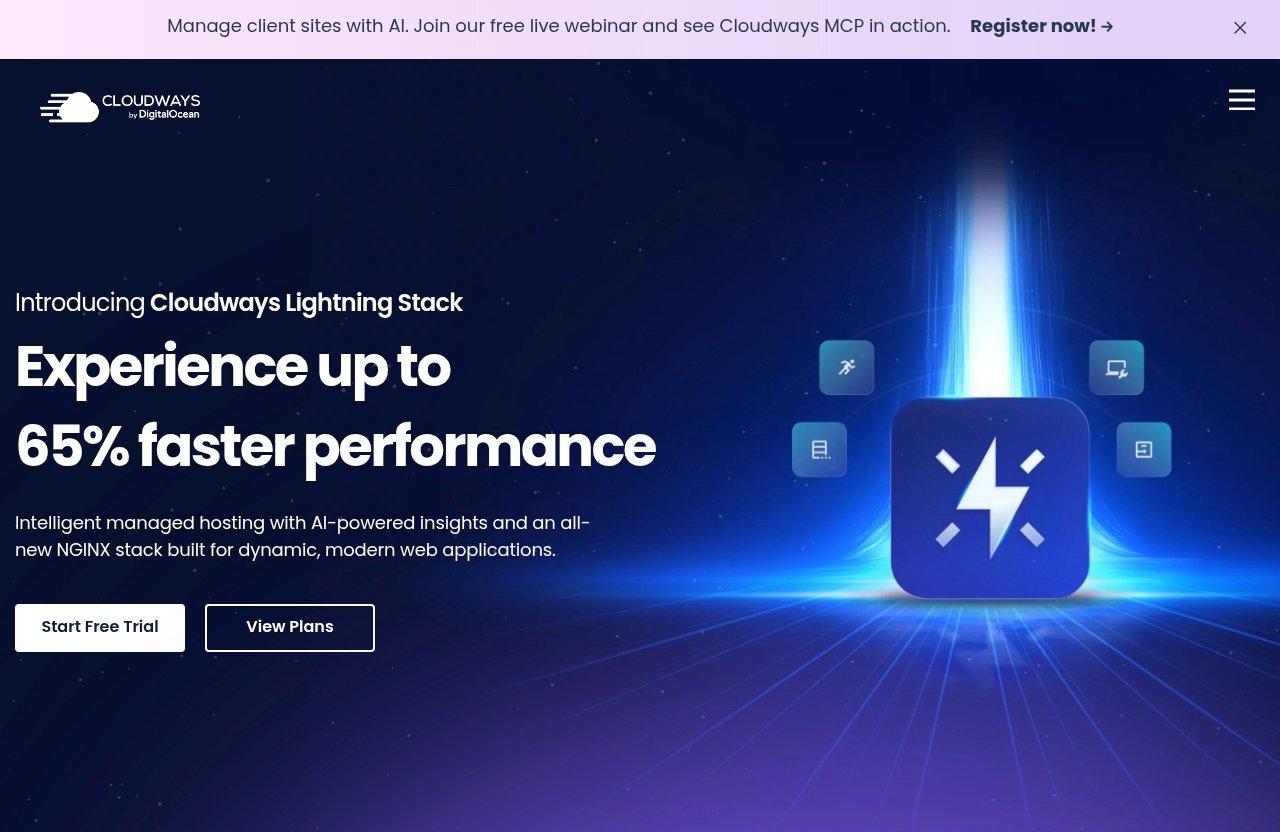
Cloudways is a managed cloud hosting platform designed to give small businesses and professionals access to cloud infrastructure without requiring them to manage servers from scratch. In practical terms, it sits between traditional shared hosting and fully self-managed cloud servers.
The official Cloudways homepage presents two product families: Cloudways Flexible, described as customisable managed hosting for WordPress, and Cloudways Autonomous, described as fully managed WordPress hosting for sites. Those are the official product categories to evaluate when deciding which path fits your business.
How Cloudways differs from shared hosting
Shared hosting is usually built around simplicity and low cost. Many small businesses start there because it is familiar, inexpensive, and easy to buy. The tradeoff is that shared hosting can become limiting as a site becomes more important to the business.
Cloudways managed cloud hosting is different because it is built around managed cloud infrastructure rather than a basic shared environment. You get more control and growth potential while Cloudways handles much of the server-management burden.
That distinction matters when asking is Cloudways worth it. If your website is not important to revenue, shared hosting may be fine. If your site needs more performance headroom, easier management, and scalability, Cloudways becomes more attractive.
Who the platform serves (SMBs, agencies, developers, ecommerce)
According to the official homepage, Cloudways serves several audience segments: SMBs, agencies, developers, ecommerce, and bloggers/publishers. That range is important because it shows the platform is not only for highly technical users.
For small business owners, the appeal is that Cloudways can support a professional website without forcing you to hire a full-time technical person. For agencies, the value is in managing multiple client projects. For ecommerce businesses, the value comes from hosting that is more aligned with growth and sales activity.
This is why a simple cloudways review should not only list features. The real question is whether Cloudways fits the way your business makes money.
Supported apps and cloud providers
The official Cloudways homepage lists support for WordPress, Laravel, Magento, WooCommerce, and PHP. That makes the platform relevant for common small business use cases, especially WordPress sites and WooCommerce stores.
Cloudways also lists cloud provider options including DigitalOcean, Vultr, Linode, AWS, and GCE. That gives buyers flexibility, though the best option depends on your site, budget, and technical needs.
If you are wondering is Cloudways worth it because you want more control than shared hosting, this app and provider flexibility is one of the reasons many small businesses consider it.
Cloudways pricing for small businesses: what you actually pay
Cloudways pricing should be evaluated as a value decision, not just a line-item expense. The official pricing-page information provided confirms that Cloudways uses flexible and transparent pricing for pay-as-you-go plans.
Important note: the verified pricing information available here does not include specific current plan prices. Before publishing or making a buying decision, you should check the live Cloudways pricing table on the official pricing page and avoid relying on outdated screenshots, old reviews, or guessed plan amounts.
Pay-as-you-go pricing model
The official pricing language confirms a pay-as-you-go model. For small businesses, that can be useful because it aligns hosting costs more closely with actual usage and plan selection rather than forcing a one-size-fits-all annual commitment.
The business value is flexibility. If your site grows, your hosting setup can be evaluated and adjusted around that growth. If you are testing a new project, you are not necessarily locked into a rigid hosting structure from day one.
When evaluating cloudways pricing, look beyond the monthly number. Ask whether the plan saves admin time, reduces support friction, and gives your site room to grow.
Flexible vs Autonomous plans
Cloudways shows two official product families on its homepage: Cloudways Flexible and Cloudways Autonomous. Cloudways Flexible is positioned as customisable managed hosting for WordPress, while Cloudways Autonomous is positioned as fully managed WordPress hosting for sites.
For a small business, the difference comes down to how much flexibility and management style you want. If you like more control, Flexible may be the product family to investigate. If you want a more fully managed WordPress approach, Autonomous may be relevant.
Because plan details can change, do not assume a specific feature or price without checking the live pricing table. The responsible answer to is Cloudways worth it includes verifying current cost against your real website needs.
What the official site confirms about pricing philosophy
The official pricing-page text confirms: “Using flexible and transparent pricing for pay as you go plans.” That is the verified pricing philosophy available from the provided source material.
What I would not do is invent plan prices, RAM allocations, storage amounts, bandwidth figures, or promotional discounts. Those details should be confirmed directly on the Cloudways pricing page before you subscribe.
For a small business, transparent pay-as-you-go pricing is helpful, but the final value depends on your site’s role. If the site generates leads or revenue, is Cloudways worth it often comes down to whether the managed hosting value offsets the cost compared with cheaper alternatives.
Cost vs value: where Cloudways can save time and money
Cheap hosting can be fine at the beginning, but it can become expensive in less obvious ways. Slow pages, support delays, plugin conflicts, difficult migrations, or confusing server tasks can eat into your time and momentum.
Cloudways is not automatically the cheapest option. Its value is that it can reduce technical overhead for businesses that need stronger hosting without becoming infrastructure experts.
Lower admin burden for non-technical owners
Most small business owners do not want to manage servers. They want their website to load, stay secure, support marketing campaigns, and be recoverable when something goes wrong.
Cloudways’ official feature claims include 24×7 Expert Support, Free Migration, Free SSL, Performance, and Security. Those are the practical pillars that matter for non-technical owners.
This is where cloudways for small business can make sense. If you are spending hours chasing hosting problems, the cheaper plan may not actually be cheaper once your time is included.
Potential performance gains versus shared hosting
Cloudways officially positions performance as one of its key features. I will not claim specific benchmark improvements here because those depend on site build, theme, plugins, traffic, content, and configuration.
However, from a general hosting perspective, moving from entry-level shared hosting to managed cloud hosting can give a business more room to handle a serious website. That does not guarantee every site will become fast automatically, but it gives you a stronger foundation to work from.
If performance affects conversions, bookings, or sales, is Cloudways worth it becomes less about hosting cost alone and more about revenue protection.
Value for businesses with multiple sites or client work
Cloudways can be especially useful when you manage multiple business sites or client projects. Agencies and developers are among the official audience segments listed by Cloudways, and that makes sense.
The more sites you manage, the more valuable centralized hosting management can become. Time saved on setup, migration, SSL, support, and routine site handling can compound across projects.
For an agency, the answer to is Cloudways worth it may be yes even faster than for a single-site business, because hosting workflow efficiency directly affects margins.
Official website · Latest pricing & offers
Support, onboarding, and day-to-day management
Support is one of the biggest reasons small businesses consider managed hosting. A lower-cost host may look attractive until you need urgent help and cannot get a useful answer quickly.
Cloudways officially lists 24×7 Expert Support and Free Migration on its homepage. Those two features are particularly relevant for small businesses without in-house technical staff.
24/7 expert support
Cloudways support is officially described as 24×7 expert support. For a small business, that matters because website problems do not always happen during convenient business hours.
Good hosting support does not replace a developer for every site issue. But it can reduce the burden when you need help with hosting-related questions, setup, migration, SSL, or platform-level troubleshooting.
If you are comparing cloudways support with budget hosts, ask what kind of help you realistically need. The more your business depends on the site, the more valuable reliable support becomes.
Free migration
Free migration is another official Cloudways feature. This is useful because moving a website can be intimidating for non-technical owners, especially if the site already generates leads or sales.
A migration benefit can reduce switching friction. Instead of delaying a move because you are afraid of breaking something, you can use the host’s onboarding process to help get the site moved.
This is one reason is Cloudways worth it is often answered differently by established businesses than by brand-new websites. If you already have a live site, easier migration has real value.
Dashboard and site management experience
Cloudways is designed to reduce the sysadmin workload, but it is still a more capable environment than basic shared hosting. That means there may be a learning curve if you are used to a very simple beginner dashboard.
Day to day, the value is in having a managed hosting environment where important hosting tasks are organized in one place. Officially confirmed features include free SSL, support, security, and performance positioning.
For backups and other operational details, check the live Cloudways documentation and dashboard before relying on any specific workflow. A careful buyer should verify the exact management features they need before subscribing.
Performance and scalability: can Cloudways grow with your business?
A small business website should not be judged only by today’s traffic. If your marketing works, your hosting needs may change. Campaigns, seasonal demand, ecommerce growth, and content traffic can all increase pressure on your site.
Cloudways is positioned around managed cloud hosting, performance, and business growth use cases. That makes it more appealing for businesses expecting their website to become more important over time.
When managed cloud hosting matters
Managed cloud hosting matters when you need more than a basic online presence. It matters when website speed, uptime, checkout experience, lead generation, and publishing consistency influence revenue.
For a simple brochure site, managed cloud hosting may be unnecessary. But for a business-critical WordPress site, WooCommerce store, or client portfolio, it can be a sensible investment.
This is why cloudways performance should be judged in context. The platform gives you a more serious hosting foundation, but your site build and maintenance still matter.
Scaling for traffic spikes
Traffic spikes can come from paid ads, email campaigns, product launches, press mentions, seasonal promotions, or viral content. A small business may not need enterprise infrastructure, but it does need hosting that can grow with demand.
Cloudways’ cloud provider options include DigitalOcean, Vultr, Linode, AWS, and GCE. That provider flexibility is one of the reasons businesses consider Cloudways when they outgrow basic shared hosting.
If you are asking is Cloudways worth it because you expect growth, the answer is more likely yes than if your site will stay small and static for years.
Best use cases: WooCommerce, agencies, and growing content sites
Cloudways supports WooCommerce, WordPress, Magento, Laravel, and PHP, according to the official homepage. For small businesses, the most common use cases are WordPress websites, WooCommerce stores, and content-driven sites.
WooCommerce stores benefit from hosting that is built for a more serious workload than a simple brochure site. Agencies benefit from managing client sites in a more scalable environment. Publishers benefit when traffic growth makes cheap hosting feel restrictive.
For these use cases, is Cloudways worth it is often yes because hosting quality can affect sales, client satisfaction, and publishing momentum.
What small businesses should watch out for before buying
Cloudways is a strong option for many small businesses, but it is not perfect for every buyer. The best purchasing decision comes from understanding both the benefits and the tradeoffs.
The main watch-outs are learning curve, budget fit, and whether your site is complex enough to justify managed cloud hosting.
Learning curve compared with shared hosting
Cloudways may feel less beginner-first than some traditional shared hosting providers. It is built to simplify cloud hosting, not to remove every decision from the website owner.
If you are completely new to hosting, you may need time to understand the dashboard, product options, and terminology. That does not mean beginners cannot use it, but it does mean you should be willing to learn.
So, is Cloudways good for beginners? It can be, especially for beginners with growth plans. But the absolute easiest beginner host may be a better fit for someone launching a tiny site with no technical interest.
No one-size-fits-all for micro-sites
A micro-site with a few pages, low traffic, and no growth plan may not need Cloudways. In that case, the extra flexibility may not translate into meaningful business value.
For example, a one-page site for a hobby project might be better served by a cheaper and simpler hosting option. Spending more for managed cloud hosting only makes sense when the website’s role justifies it.
This is the honest answer to is Cloudways worth it for very small sites: maybe not yet.
Feature limits and hidden tradeoffs to evaluate
Before buying, evaluate what you personally need: pricing, migration process, support expectations, SSL, site management, performance requirements, app support, and future growth. Also verify current plan details directly from Cloudways because pricing pages and product offerings can change.
Do not assume Cloudways includes every feature in the exact way another host does. Compare the live plan table, product documentation, and support scope before making a final decision.
A smart cloudways worth it reddit search may reveal user opinions, but treat forum comments as anecdotal. Use them to identify questions, not as a substitute for checking official Cloudways information.
Cloudways worth it scenarios by business type
Different small businesses get different value from Cloudways. A local plumber, an ecommerce store, a content publisher, and a developer-led startup do not have the same hosting priorities.
Use the table below as a practical decision guide.
| Business type | Is Cloudways a strong fit? | Why |
|---|---|---|
| Local lead-gen site | Often yes | Better hosting can support ads, SEO landing pages, forms, and booking flows |
| Small ecommerce store | Yes, if revenue depends on the site | WooCommerce and Magento support make Cloudways relevant for online selling |
| Content site or niche publication | Yes, if traffic is growing | Publishers benefit from performance focus and growth flexibility |
| Agency managing client sites | Often yes | Agencies are an official audience segment and may value workflow efficiency |
| Tiny brochure site | Usually no | Basic shared hosting may be enough if traffic and complexity are minimal |
| Developer-led startup | Often yes | Supports Laravel, PHP, WordPress, and multiple cloud providers |
Local service business or agency lead-gen site
For a local service business, the website often exists to generate calls, form submissions, bookings, or quote requests. If hosting problems interfere with that, the lost opportunity can be more expensive than the hosting bill.
Cloudways can make sense when your lead-gen site is tied to SEO, paid ads, or local campaigns. Free migration and 24×7 support are useful if you do not have technical staff.
For a small agency, the value can be even clearer. Managing multiple client sites on a more capable platform can reduce operational friction and improve client confidence.
Small ecommerce store
A small ecommerce store has more at stake than a brochure site. Product pages, checkout flows, seasonal promotions, and customer trust all depend on the website working well.
Cloudways officially supports WooCommerce and Magento, which makes it relevant for ecommerce workloads. I would still recommend checking current plan details and matching the hosting setup to your catalog, traffic, and growth expectations.
For ecommerce, is Cloudways worth it often depends on how much revenue your store generates. If the store is more than a side experiment, stronger managed hosting can be a rational investment.
Content site or niche publication
Bloggers and publishers are official Cloudways audience segments. That matters because content sites often start small but can grow quickly when SEO, newsletters, or social channels begin working.
A growing publication needs hosting that can support traffic increases and routine content operations. Cloudways can be a good fit if your site is becoming a business asset rather than a casual blog.
If your content site is still experimental, compare costs carefully. But once traffic has value, cloudways SMB hosting can make more sense than chasing the cheapest plan.
Developer-led startup
Cloudways also serves developers and supports Laravel, PHP, WordPress, Magento, and WooCommerce. That makes it relevant for startups or small teams that want cloud flexibility without managing every infrastructure detail manually.
A developer-led business may appreciate provider choice across DigitalOcean, Vultr, Linode, AWS, and GCE. The right choice still depends on requirements, budget, and the live plan table.
For this audience, is Cloudways worth it often comes down to time. If Cloudways reduces server management while preserving useful control, it can be a strong business tradeoff.
Final verdict: should a small business choose Cloudways?
For most serious small business websites, Cloudways is worth shortlisting. It is especially compelling if your site supports revenue, leads, ecommerce, publishing growth, or client work.
It is not the best fit for every beginner or every micro-site. But if you want managed cloud hosting with official support for WordPress, WooCommerce, Magento, Laravel, and PHP, Cloudways offers a practical upgrade path from basic shared hosting.
Buy if you value speed and control
Buy Cloudways if you value managed cloud hosting, provider flexibility, 24×7 expert support, free migration, free SSL, and a platform positioned around performance and security. These official features line up well with what many small businesses actually need.
You should also consider it if you are tired of outgrowing cheap hosting. When your site becomes part of your marketing or sales engine, hosting quality matters more.
In that situation, is Cloudways worth it is usually yes.
Skip if you want the absolute lowest-cost option
Skip Cloudways if your top priority is the lowest possible upfront cost. A tiny website with minimal traffic may not benefit enough from managed cloud hosting to justify the spend.
Also skip it if you want the simplest possible beginner hosting experience and do not want to learn a new dashboard. Cloudways is approachable, but it is still more advanced than ultra-basic shared hosting.
That does not make it bad. It simply means cloudways worth it for small business depends on business needs, not hype.
Best next step before subscribing
Before subscribing, compare three things: your current traffic, your technical comfort, and your growth plans. Then check the live Cloudways pricing table directly, because current plan details should always be verified at the source.
If your website contributes to revenue or growth, Cloudways deserves a serious look. You can review the current product and pricing information on the official Cloudways site here: visit Cloudways.
Affiliate disclosure: Stack & Speed may earn a commission if you buy through this link, at no additional cost to you. The recommendation remains balanced: Cloudways is a strong choice for growing small businesses, but not necessary for every tiny site.
Official website · Latest pricing & offers
FAQ
What are the cons of Cloudways?
The main cons of Cloudways are the learning curve, the fact that it may feel less hand-holding than beginner-first shared hosts, and the need to decide whether managed cloud hosting fits your budget. It can also be more than you need for a very small, low-traffic site.
Before buying, check the live pricing table and product details. Cloudways is valuable when the site justifies the added flexibility and management benefits.
Is Cloudways good for beginners?
Cloudways can be good for beginners who want managed hosting and are willing to learn a new dashboard. It is especially suitable for beginners who have growth plans or want to avoid server administration.
However, if you want the simplest and cheapest beginner hosting experience, a basic shared host may feel easier. The answer to is Cloudways good for beginners depends on whether you value growth potential over maximum simplicity.
Which is better, Cloudways or Hostinger?
It depends on your priorities. Hostinger may appeal more to buyers focused on low upfront cost and beginner-friendly simplicity, while Cloudways is typically more attractive for managed cloud hosting, control, and scaling potential.
Do not choose based only on brand comparisons. Compare your site’s needs, support expectations, technical comfort, and the live pricing pages before deciding.
Is Cloudways worth it for a small business website?
Yes, Cloudways is worth it for a small business website when speed, support, uptime, growth, and easier server management matter. It is a strong fit for lead-generation sites, WooCommerce stores, agencies, and growing content sites.
It may not be worth it for a tiny brochure site with minimal traffic and no growth plan. In that case, cheaper shared hosting could be enough.
What makes Cloudways different from shared hosting?
Cloudways is managed cloud hosting, while shared hosting usually places many sites in a simpler, lower-cost environment. Cloudways is designed to reduce server administration while offering more control and scalability than typical shared hosting.
That difference matters most when your website becomes important to revenue, marketing, or client work. For growing businesses, this is the core reason Cloudways can be worth the money.
Related Reading
- Cloudways pricing 2026 explained
- Cloudways discount 2026 guide
- Cloudways review Reddit: honest 2026 reality check before you buy
